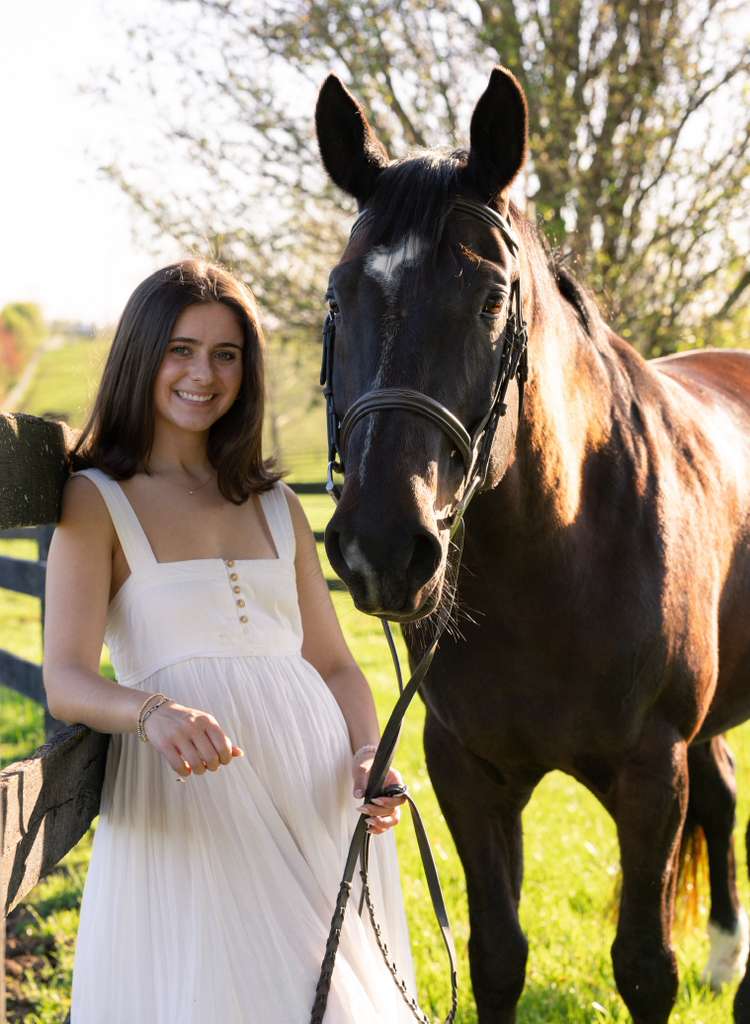
The alarm goes off at four in the morning. Not 4:30. Not "I'll just hit snooze once." Four o'clock, and you are expected to be functional, to be present, to be thinking clearly about a 500-kilogram animal whose mood you cannot predict and whose wellbeing depends entirely on your attention. I did this for two years in Normandy. I did it before that on yards in Virginia. And when I look back at my career — the degree I finished, the agency years in Washington, the freelance work that followed — I trace an enormous amount of what I became professionally back to those mornings.
People don't take grooming seriously. I think they should.
What Grooming Actually Is
The word "groom" flattens something that is genuinely complex. A professional groom isn't someone who brushes horses and holds a lead rope. A groom is a diagnostician, a planner, a logistics coordinator, and a first responder. You are assessing an animal that cannot tell you where it hurts, and you are doing this while simultaneously managing four or five other horses, preparing equipment, coordinating with a trainer, tracking feeding and medication schedules, and remembering that the farrier is coming on Thursday and the rug with the broken surcingle needs to go in for repair before the weekend.
You are doing all of this before most people have had their first coffee. You are doing it in the cold, in the dark, often alone, and the quality of your work is immediately and visibly legible to anyone who knows what they're looking at. A well-turned-out horse tells its own story. A poorly managed stable tells another. There is nowhere to hide.
The Transferable Skills Nobody Mentions
What this builds, over time, is something that no business school module on "project management" will give you. It builds a kind of executive function that operates under genuine pressure — not the manufactured pressure of a deadline, but the real pressure of a living system that cannot pause while you get yourself together.
The attention to detail I developed checking legs for heat and swelling, spotting the early signs of a stone bruise or a beginning rub mark, noticing that a horse had eaten less overnight — I use that same attention in editorial work every day. The ability to hold many competing priorities simultaneously and make real-time decisions about which one matters most? That came from a stable yard, not a boardroom.
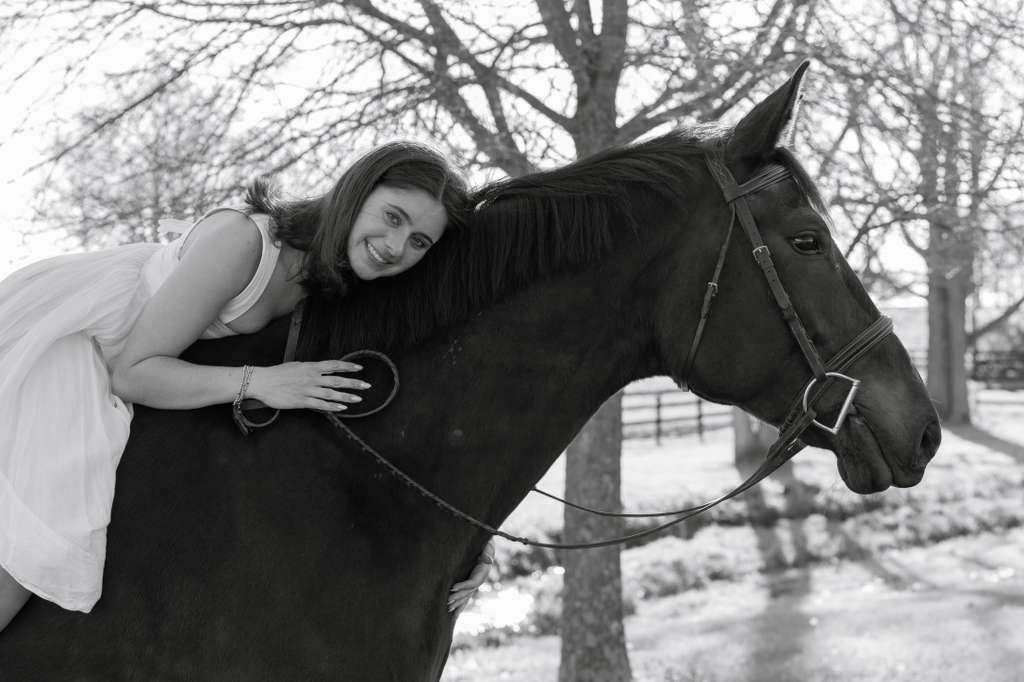
There is also something quieter and harder to articulate, which is the emotional regulation that comes from spending your mornings with horses. Horses punish anxiety. If you walk into a stable stressed and rushed and twitchy, you'll have a stressed, rushed, twitchy horse. So you learn, gradually and not always gracefully, to leave it outside the stable door. To come into each moment genuinely present. That quality — the ability to be present rather than performing presence — is, I would argue, the most underrated professional skill there is.
What the Yard Gave My Degree
My degree was in marketing and communications. I wrote long papers. I gave presentations. I managed group projects with people who did not always want to be managed. And I was consistently better at those things than I had any right to be, given how much of my time and energy was split between lectures and stables. I think the reason is that the discipline of the yard had trained me to work efficiently within a constraint I couldn't negotiate with.
You can't tell a horse "I'll clean your water bucket later." You either do it now or you don't, and the consequences are entirely visible. Deadlines stopped feeling abstract once I'd spent enough mornings where the cost of not finishing something was an animal standing in conditions it didn't deserve.
"What a classroom gives you is knowledge. What a stable yard gives you is the capacity to act on it under pressure."
At the Agency, and After
When I started working agency-side in Washington D.C., I noticed something quickly: I could hold a client meeting at 8am after four hours of sleep and function at a level that surprised people. Not because I was exceptional, but because I had spent years training for exactly that. I could read a room — the tension in a creative director's posture, the slight withdrawal when a concept isn't landing — with the same attention I'd developed reading horses. I could take critical feedback without it destabilising me, because I'd spent years working with animals that gave feedback in the most brutally honest and non-personal way imaginable.
None of this appeared on my CV. It's essentially impossible to communicate in a cover letter. But it shaped every professional interaction I had, in ways I'm only now beginning to fully map.
What I'd Tell Anyone Who Dismisses It
If you are a young person in the equestrian world, or a parent watching your child spend significant time on a yard, I would ask you to stop seeing that work as a cost. It is not time taken from "real" preparation for life. For many of us, it is precisely the preparation for life — the practical, unglamorous, demanding kind that a classroom cannot replicate.
The skills it builds are slow to develop and essentially impossible to communicate to someone who has never stood at 4am in a cold stable with a flashlight checking whether a horse's leg is warmer than it should be. But they are real, and they are durable, and I would not trade them for anything a lecture hall ever gave me.