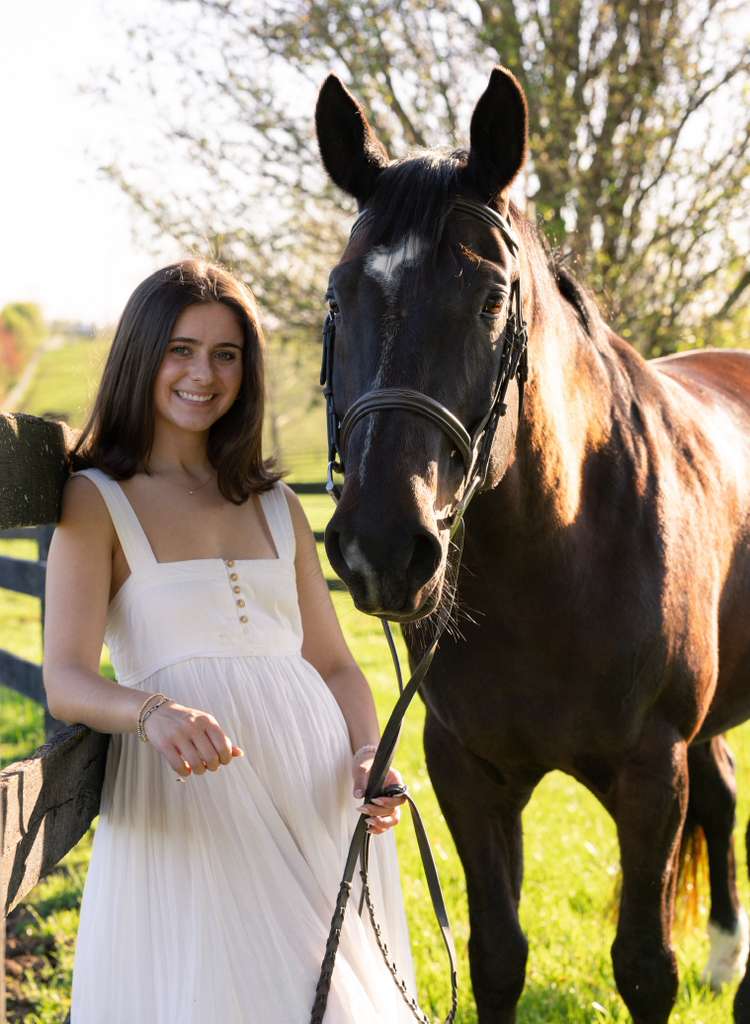
A child on a horse for the first time is not cute in the uncomplicated way people expect it to be. What it is, actually, is alarming for the child — and profound for anyone paying close attention. The horse is enormous. The ground is very far away. The child cannot control what's happening. And somewhere in the middle of all of that — usually within the first ten minutes — something shifts. The fear becomes something else. The child relaxes. The horse, feeling it, settles too. And a conversation begins that will, if the child is lucky, last for decades.
I was nine when that conversation started for me. I'm still in it.
What Horses Teach That Nothing Else Does
Horses teach children consequence in a way that is immediate, unjudgmental, and impossible to negotiate with. A horse responds to what you actually do, not to what you intend. If you grip with your leg in anxiety, the horse moves forward. If you brace through your back, the trot becomes jarring and uncomfortable. If you approach the stable tense and rushed, you will have a tense and rushed horse. The feedback loop is immediate and entirely non-personal. The horse is not punishing you. It is simply telling you the truth.
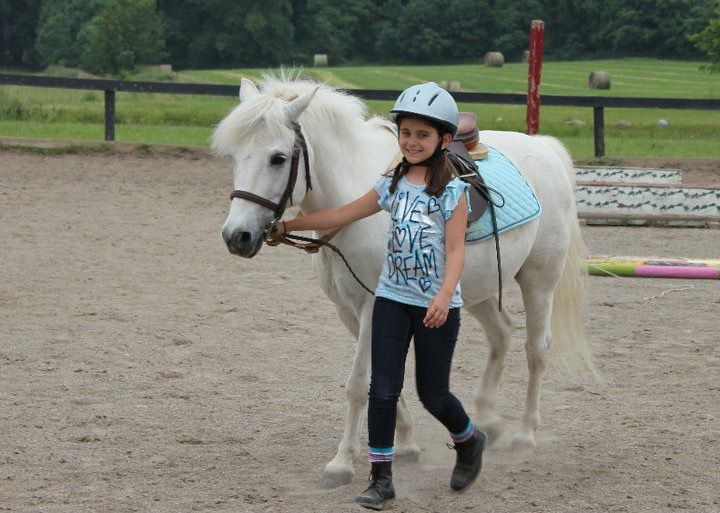
Children understand this on a cellular level almost before they understand it intellectually. I have watched a seven-year-old take in a piece of feedback from a pony — a flick of the tail, a slight stiffening in the back — and adjust, quietly and correctly, without any adult intervention. The pony was the teacher. The child was listening.
They also learn patience. Real patience — not the performance of waiting, but the genuine acceptance of a long, nonlinear learning curve. The skill gap between wanting to ride well and being able to ride well is enormous, and it does not close quickly regardless of how hard you try. Horses teach children to tolerate that gap without giving up or pretending it doesn't exist. In an era designed to reward instant competency, that is a quietly radical education.
Non-Verbal Intelligence
A significant portion of horsemanship operates below the level of language. You read the ear — the angle, the softness, the way one tips back and the other rotates forward. You read the eye. You read the quality of tension in the neck, the way a horse's whole body tells you something different from what its behaviour appears to say. You learn that what a creature shows you and what it feels are often two different things, and that bridging that gap requires attention rather than force.
Children who grow up with horses develop a particular quality of emotional attention that I notice again and again in the adults they become. A sensitivity to what isn't being said. A habit of reading the room before entering it. An ability to sit with uncertainty without immediately reaching for a solution. These are not small things. They are, in fact, some of the most important things.
The French Model vs the American One
In France, equestrian education for children is integrated into the galop system from the start. A child working toward their first galop is not just learning to sit on a pony — they are learning stable management, horse anatomy, feeding, and basic care alongside riding. The horse is a subject of knowledge, not just a vehicle. This integration matters enormously.
An American child in a standard lesson programme often learns to ride without learning much about the horse beneath them. What does it eat? How does it sleep? What does heat in a leg mean, and why should you check for it? These questions, in France, are part of the curriculum from the beginning. In many American barns, they are never asked at all.
I'm not suggesting the French model is without flaws — no system is. But the underlying principle, that understanding the horse is inseparable from learning to ride the horse, is one I find both compelling and consistently under-valued outside of Europe.
"The best thing a horse does for a child is refuse to pretend. It will not perform patience while receiving impatience. It will not fake relaxation in a tense environment. It simply tells the truth — and children learn to listen."
Why This Matters Now
We are in an era of screens, optimised schedules, and the constant engineering of children's time toward measurable outcomes. Riding doesn't optimise. It doesn't offer progression metrics or ranked leaderboards or dopamine-calibrated feedback loops. What it offers instead — and this is not a small thing — is the experience of being genuinely responsible for another living creature.
A horse cannot be put down. It cannot be turned off. It cannot wait while you finish something else. Its needs are consistent and non-negotiable, and meeting them requires showing up when you said you would, at the time you said you would, with the attention the job requires. For a child accustomed to a world designed around their convenience, this is genuinely formative.
Horses resist optimisation. They cannot be scheduled. They require presence, patience, and a willingness to be wrong, quietly, on a Tuesday morning when nothing is going according to plan. That is, I think, precisely what children need more of. Not less.